Service learning trips open minds

South Africa is the wealthiest country in sub-Saharan Africa, possessed of great mineral wealth and extensive areas of rich farmland. But it is also the most unequal country in the world, with luxurious suburbs lying directly across the road from desperate slums and rich estates amid devastating rural poverty. South Africa’s poor are some of the poorest people in the world. And the gap between the rich and the poor continues to be highly racialized, despite the end of South Africa’s infamous system of apartheid in 1994. In addition to poverty, the South African poor face numerous challenges with regards to health and ecological well-being, including food insecurity, unclean water, and high rates HIV/AIDS.  However, despite these challenges, there are many opportunities for improvement. Agroecological approaches to development, combined with strong community ties and a commitment to social justice, can lead to significant improvements in nutrition, livelihood, and local infrastructure. Understanding environmental health and agroecology in South Africa has pushed University of Wisconsin-Madison students to grapple with the complexities of improving health outcomes in a development context across rural and urban lines.

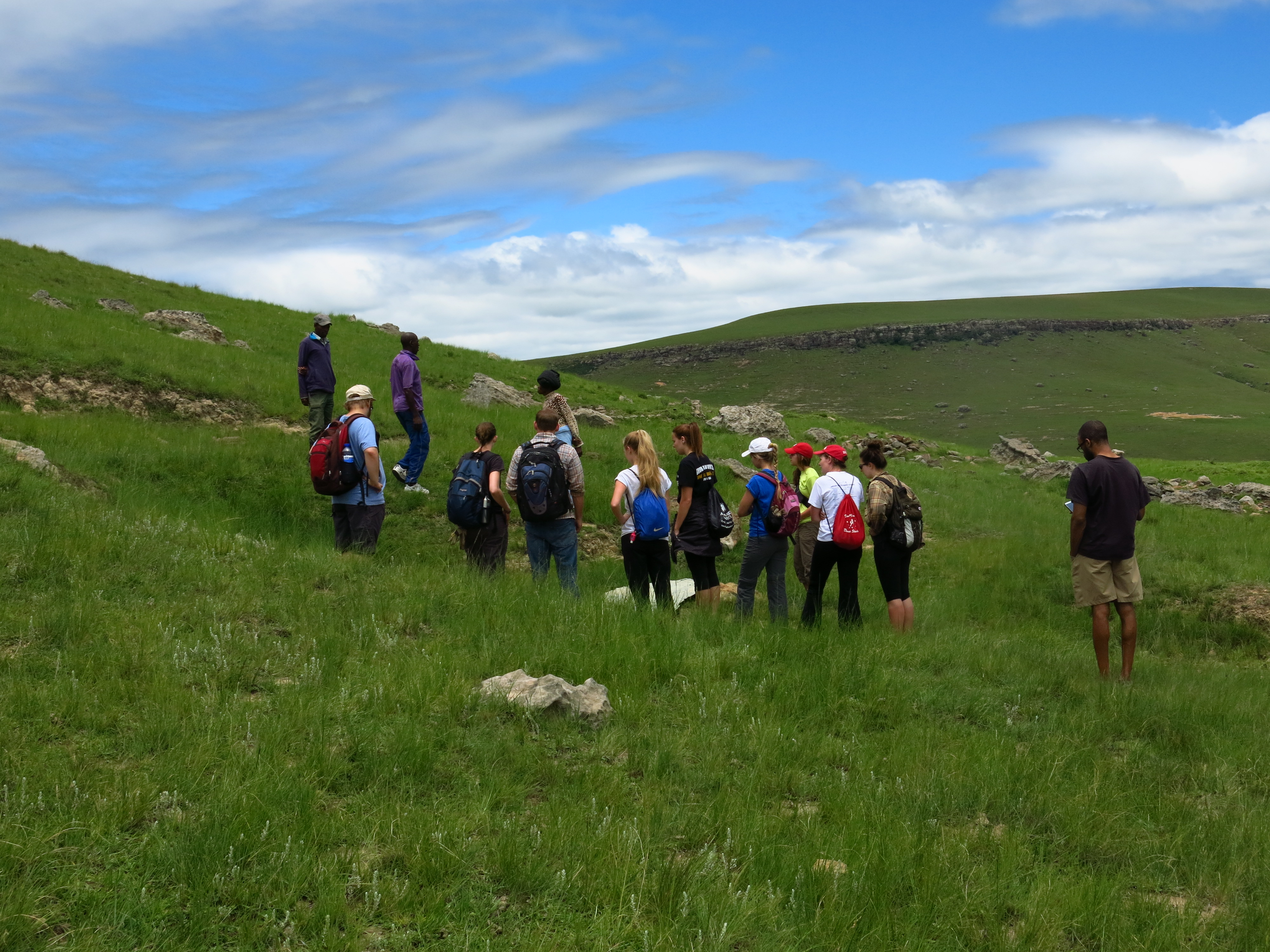
The LAND Project has led three student field course and service learning trips (exchanges) to South Africa (as of 2018).  On the most recent trip (2017), students learned about the history and ecology of South Africa, the agroecological basis of environmental health, and the multifactorial determinants of health for urban and rural populations in the South Africa. The course focused on both rural and urban South Africa.  Students visited multiple sites, including the township of Alexandra in Johannesburg; the village of KuManzimdaka in the Eastern Cape; and Bucklands Reserve and Kaysers Beach, also in the Eastern Cape.  Students will be given the opportunity to observe different farming efforts (urban and rural) and assess variations in healthcare across rural and urban settings.  Students will also participate in several service learning activities including organizing a children’s “Agroecology Camp.”  Later on the trip, students toured an urban hospital and spent time talking with local health professionals.  The course included a home stay in a rural village, providing an intimate opportunity for cultural exchange.

Wisconsin Idea Undergraduate Fellowship awarded for Kumanzimdaka water project

Loo developed his successful grant proposal with support from Michael Bell and Valerie Stull of the LAND Project.  
Loo developed his successful grant proposal with support from Michael Bell and Valerie Stull of the LAND Project.

In March 2015, UW-Madison undergraduate Theo Loo was awarded a Wisconsin Idea Undergraduate Fellowship for $4,500.00 to pursue a project on “Waterborne Disease Prevention” in Kumanzimdaka, South Africa.  Loo, a Microbiology and Global Health major, designed this project to research and reduce the prevalence of waterborne diseases in Kumanzimdaka village in South Africa by implementing a water security system to protect the village’s water supply. During the summer of 2015, he traveled to the village to test the water source for waterborne pathogens, administer a survey among villagers, conduct water sterilization workshops, and generate a map of the area using ArcGIS.  Data collected will be analyzed and a report developed and sent to Indwe Trust, the LAND Project’s South African collaborator, to implement a physical water source protection system.  To learn more about Theo’s findings, see our page on Water Security.

The University of Wisconsin-Madison Wisconsin Idea Undergraduate Fellowship team was impressed how this exciting exciting project demonstrates Loo’s commitment to expand the Wisconsin Idea and serve the community around the world.

You can also view a video that Theo put together about Water Security in Mmangweni Village, Eastern Cape, below.

https://vimeo.com/183134892


A ram, a garden, and a survey: Cal Poly students in Eastern Cape

In September 2014, students in Professor Dave Watts‘ landscape architecture course at California Polytechnic State University traveled to the Eastern Cape to run a participatory community mapping project, improve Manzimdaka school garden, and conduct a community needs assessment survey.  For the participatory photo mapping project, local village members guided students through their favorite places and their least favorite places in their home villages.  Along with the LAND Project’s Liza Lightfoot  and Mpumelelo Ncwadi, Cal Poly divided into divided two teams – one group conducted the needs assessment survey with Mpumi, while the other group worked with local villagers and school children in the garden.

Liza, who coordinated the garden team, describes, how, “at the end of winter, the weather was really changeable.  There’d been a bad fire the day before that’d come up to the edge of the school.  But still, people from community came to work with the garden to turn the soil.”  Working in tandem, students visitors and villagers trekked back and forth across the street to gather up manure from a neighbor’s cattle kraal to work into the soil.  The LAND Project provided seed packets and volunteers made a potting mix out of finely blended kraal manure and soil.  The students planted a lot of seedlings and put them in an area protected from the wind, while the locals planted seeds directly into the garden soil

Such productive, side-by-side work with both students and villagers is at the heart of what the LAND Project is about: blending an agroecological approach while building bridges between local people and students.

Upcoming trip: “The Agroecology of Health: Water, Food, and Well Being, South Africa”

This winter, students from UW-Madison’s College of Agriculture and Life Sciences will be traveling to Johannesburg, Elliot, and Kumanzimdaka with Michael Bell and Valerie Stull of the LAND Project.  Between late December early January, 2017, students will learn first-hand about the history and society of South Africa, the basics of agroecology and environmental health, and the multifactorial determinants of health for urban and rural populations in the South Africa & Lesotho.  Students will learn about urban agriculture initiatives in Johannesburg, and lead an agricultural education camp for children near Elliot in the rural Eastern Cape.  Throughout the trip, students will be encouraged to observe urban and rural farming and healthcare.

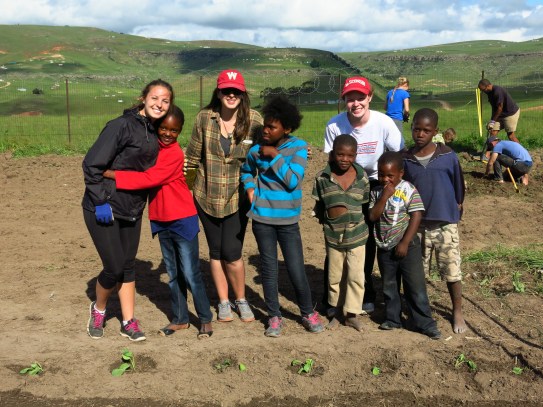
 Students from a prior UW student-learning course pose with their fellow workers in the school garden

Students from a prior UW student-learning course pose with their fellow workers in the school garden

Students will also participate in several service learning activities: possibly the construction of rainwater harvesting systems systems and the design and set-up of a composting system for a food garden at the Manzimdanka Primary School.  In Johanesburg, students will work at the Ratang Bana urban garden Service learning work will be completed in partnership with the LAND Project’s collaborator, the non-profit organization Kidlinks World Inc.  These two service-learning projects have been selected through a longstanding relationship between Kidlinks and the local community. Service learning provides an opportunity for students in this course to work with community members, local students, and leaders to plan and implement two health related initiatives. It will also provide an opportunity for learning exchange and growth between students and community members.

Students are selected for this trip from a pool of applicants and prepare throughout the fall semester through readings and discussions.  Click here to find more information about our student collaborative trips.

Upcoming Landscape Architecture student trip

Students in a landscape architecture course at California Polytechnic State University in San Luis Obispo, CA first traveled to South Africa in 2008 to build a memorial garden at Ikageng Itireleng AIDS Ministry, led LAND Project co-director Liza Lightfoot and LAND Project collaborator Professor Dave Watts.  In 2009 and 2012, new groups of Cal Poly students traveled again to the Eastern Cape to restore and build more gardens with and for children in the region.  In September 2014, Liza and Dave will take a new class of Cal Poly students to the Eastern Cape and work with The LAND Project’s key collaborator, the Ncedisizewe Co-op, to run participatory community development meetings, improve the school garden, and conduct a community needs assessment survey.  More to come!